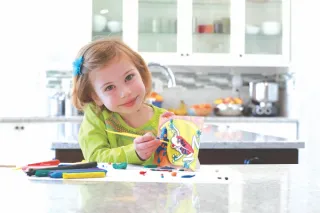
Roll A Story
Ten illustrated dice that hand your child the characters, places, and feelings a story needs to get started.
$12.99
Quantity:


2026 First-Grade Curriculum Kit
Roll A Story
"I don't know what to write about" gets a lot harder to say when the ideas are already sitting on the table. Roll A Story uses 10 illustrated storytelling dice to give your child the characters, actions, places, feelings, and other details he needs to get a story started.
Roll the dice and see what appears. Your child might find an animal, a place, an emotion, an object, or something completely unexpected. He chooses which pictures belong together, decides where his story should begin, and figures out how to connect seemingly unrelated ideas into something that makes sense.
Because there are no right answers, the same dice work at very different skill levels. A younger child can name the pictures and tell a simple story aloud. As his language skills grow, he can add details, sequence events, explain motivations, and create a beginning, middle, and end. When he's ready for written composition, the pictures become ready-made writing prompts instead of leaving him staring at a blank page.
Storytelling builds skills that come before strong writing: organizing thoughts, choosing words, making connections, sequencing ideas, and communicating them clearly. For a reluctant speaker or writer, having something concrete to talk about can make getting started considerably easier.
The 10 picture dice cover people, animals, food, places, transportation, feelings, weather, actions, sports, and objects, creating an enormous variety of possible combinations. Roll one die for a quick prompt or several for a more challenging story. Your child can also group related pictures, describe what he sees, compare images, or explain how two unlikely pictures could belong in the same story.
There is no reading required, no score to keep, and no winner or loser. Just roll the dice and see where the story goes. When you're finished, everything tucks back into the included carry bag, ready for the next tale.
How to Use Roll A Story
- Start small. Roll two or three dice and ask your child to tell you a story using the pictures that appear. If he isn't sure where to begin, help with a simple question: "What happened first?"
- Let him tell the story aloud. Don't worry about grammar, perfect sentences, or whether the plot makes much sense yet. He's practicing putting ideas into words, connecting thoughts, and communicating them in an understandable order.
- As storytelling gets easier, roll more dice. Ask him to decide which picture should start the story, how the others fit in, and what happens at the end. Questions like "How is he feeling?" "Why did that happen?" or "What happens next?" can help stretch a short answer into a fuller story.
- Try grouping the dice, too. Which pictures seem to belong together? Which one doesn't fit? Can he invent a reason they all belong in the same story? Making those connections adds another layer of creative and critical thinking.
- When your child is ready for writing, use the same routine as a creative writing warm-up. Roll the dice, tell the story aloud first, then write it down. Having the characters, setting, action, or other details already in front of him makes a blank page much less intimidating.
- Keep Roll A Story handy and use it regularly. Five minutes of storytelling is plenty—and some days one quick roll may turn into a tale nobody expected.
Publisher: Junior Learning
Contents: 10 illustrated picture dice and a carry bag
Dice Categories: People, animals, food, places, transportation, feelings, weather, actions, sports, objects
Age Recommendation: 4-9
Grade Recommendation: K-4th
Faith-Based: No